







What Do Water-Resistance Ratings Mean On A Watch?
Nearly every watch you see today will be listed as being “water-resistant”, but the meaning behind the various depth ratings given to watches is a mystery to many. Fortunately, we can give you an overview of how water-resistance is tested and what the various depth ratings mean for your Farer watch.
Water resistance is measured either as a unit of distance (such as metres or feet) or as a unit of pressure (such as bar or atmospheres). Though it is more common to see it listed in the first format, a watch’s waterproofness is tested in a pressure tank under laboratory conditions. By exerting set amounts of pressure on the watch, manufacturers can mimic the water pressures found at various depths, ensuring that a watch can handle those depths without exposing it to water.
This method can cause a lot of confusion for anyone not familiar with horological water-resistance ratings, as it does not mean a watch can necessarily be taken down to the depth it is stated as being water-resistant to, but rather that it can withstand that amount of static pressure.
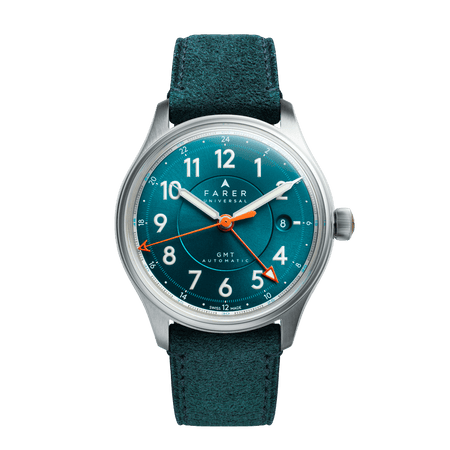
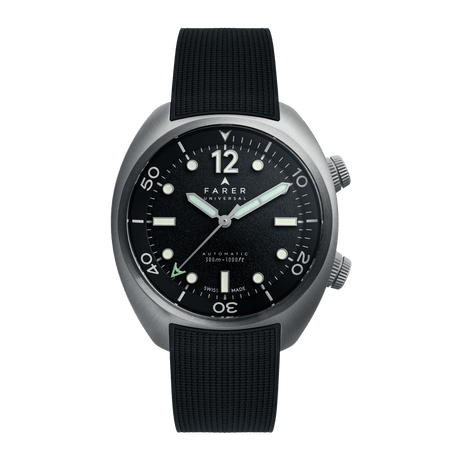
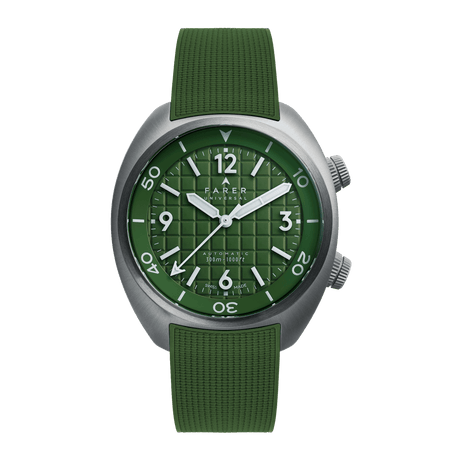
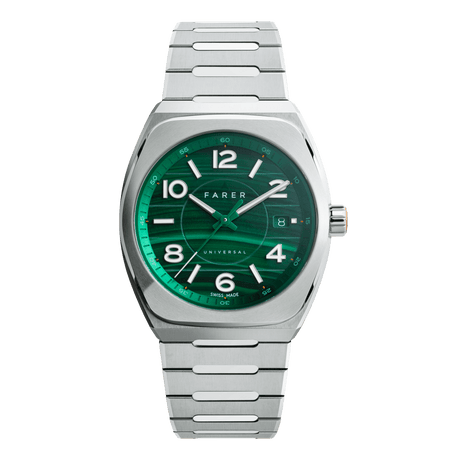
Farer watches have several different levels of water resistance. You can find the relevant water resistance of a model on the product page of the website, in the manual, or on the watch’s case back. Below are the various levels of water resistance used on our watches, and the activities they are suitable for.
50m
Watches with a water-resistance of 50m are considered suitable for splashes and light swimming on the surface. They are not suitable for jumping into water or underwater activities.

100m
If a watch has a depth rating of 100m, it is suitable for swimming and snorkelling, but not for diving.

200m or 300m
Those watches that are water-resistant to either 200m or 300m are suitable for nearly all water-borne activities, and you can swim, jump, snorkel and dive with confidence.

Regardless of which water-resistance rating your watch has, you should ensure that it gets serviced regularly. This is because the seals and gaskets that maintain a watch’s water-resistance will degrade and dry out as they age, and this can compromise the watch’s depth rating.
Lastly, we strongly advise against taking your watch into a shower, sauna, bath, or any other place with a steamy, warm atmosphere. This is because the heat of the water (or steam) and the chemicals in soaps can damage the gaskets that keep the watch water-resistant. It is also advisable to rinse a watch in cold fresh water after using it in salt water, as the salt can start to corrode the metal. Lastly, do not operate a chronograph underwater. Doing so can allow water to enter the watch.
